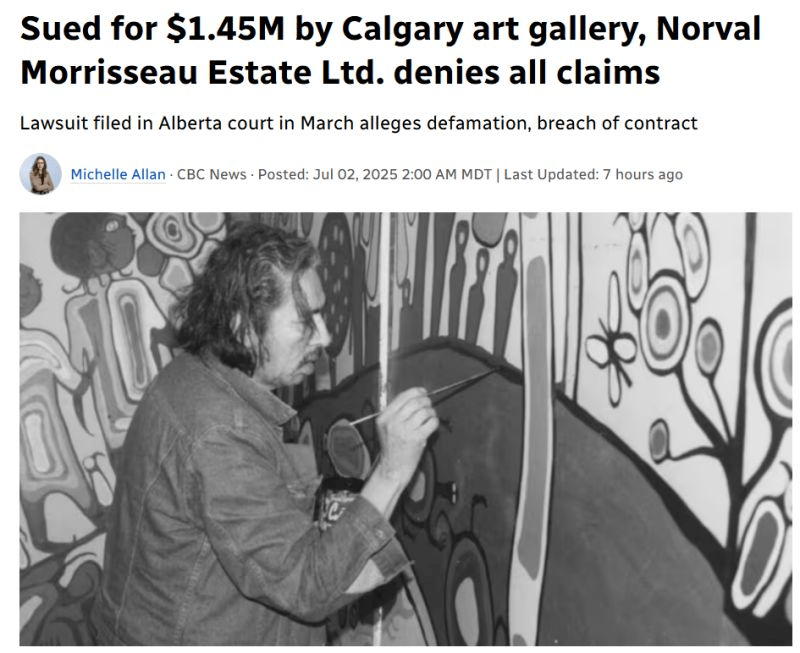
When Norval Morrisseau Estate Ltd. was sued this spring by a Calgary gallery for defamation and breach of contract, the headlines focused on reputational damage and a disputed handshake deal. CBC Thunder Bay reported the story on July 2, 2025.
But what’s happening beneath that surface is something much deeper—and more unsettling.
We are watching a tug-of-war between legal structures and legacy, between the rights of a gallery to sell work and the responsibility of an estate to safeguard cultural truth.
This is not a simple case of “he said, gallery said.” This is a familiar and painful story to many of us who work with Indigenous art, artist estates, or cultural property.
Because here’s the thing:
🖼️ There are still thousands of fake Morrisseau’s circulating.
⚖️ There is no unified system for authenticating the work of Indigenous artists.
💔 The artist’s family, community, and cultural worldview are too often sidelined.
So when we talk about contracts and public statements, we also need to ask:
-Who gets to define authenticity?
-How do we reconcile moral authority with legal incorporation?
-Can the market ever serve Indigenous cultural sovereignty, or only exploit it?
As someone who has worked in museum collections and cultural investment, I believe this case is not just a flashpoint; it’s a warning signal. We need a more robust framework for ethical estate governance, particularly when it comes to Indigenous artists.
This story isn’t over. But it’s already asking us hard questions.
Authenticity, Authority, and the Art Market: The Morrisseau Estate Lawsuit Isn’t Just a Legal Story
Time to Read:
1–2 minutes
 EMC³ Consulting
Leave a comment