
Author: Erin McDonald
-

Dissonance in Public Access: The Offline Status of CANADA’S Public Collections
Public collections in Canada are publicly funded and held in trust by institutions. However, legal considerations are increasingly shaping how these collections are accessed. A recent CBC article reported that the National Gallery of Canada holds over 87,000 works, yet only a small portion of them are accessible online. Institutions frequently cite copyright uncertainty and…
-
Dissonance: Art as an “Alternative Asset” — and the Valuation Fragility Beneath It
A recent Motley Fool article encourages investors to evaluate art as a portfolio diversifier — an asset class that is uncorrelated with equities, potentially inflation-resistant, and capable of delivering prestige alongside returns. The framing is familiar: art behaves differently from public markets; therefore, it may serve as a hedge. It is not wrong. It is…
-

When the Record Disappears, So Does the System
The quiet dismantling of Canada’s heritage infrastructure By the time this spring arrives, the Canadian Register of Historic Places will be gone. No archive. No successor platform. No national point of reference. For those outside the heritage field, this may sound like a technical housekeeping issue. A website reaching the end of its technological life.…
-

Dissonance Series: When Institutions Confuse Risk Management with Moral Clarity
A reflection on the AGO, censorship, and the collapse of nuance. On this topic especially, I must begin with precision. Antisemitism is the hatred of Jewish people. Criticism of the State of Israel, its policies, or its military actions is not, by definition, antisemitism. Conflating the two is not only intellectually lazy; it is historically…
-
Dissonance: Public Art From Monumentality to Community Connection
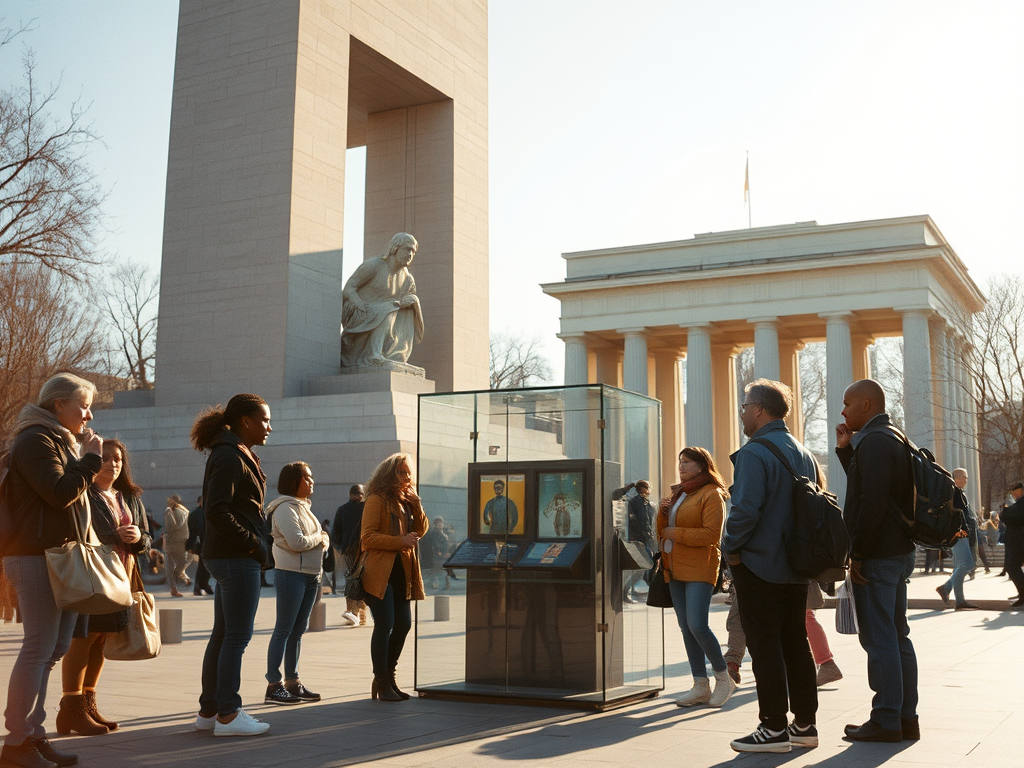
A reflection on community connection, cultural placemaking, and economic responsibility There is an assumption built into many percent-for-art programs that bigger is better. Bigger budgets.Bigger objects.Bigger gestures.Bigger permanence. We have learned to equate scale with seriousness and monumentality with value. If a work is not physically imposing, technologically complex, or structurally permanent, it is often…
-

Dissonance Series: The Untold Economic Impact of Canada’s Arts Sector
The content examines the systemic challenges faced by leaders like Alexandra Suda, who are brought in as change agents but become scapegoats for long-standing issues. It highlights the “glass cliff” phenomenon, where women leaders advocating for equity are often unsupported during transitions. The piece calls for better institutional support for genuine change.
-
Dissonance Series: When the Change Agent Becomes the Scapegoat
The content examines the systemic challenges faced by leaders like Alexandra Suda, who are brought in as change agents but become scapegoats for long-standing issues. It highlights the “glass cliff” phenomenon, where women leaders advocating for equity are often unsupported during transitions. The piece calls for better institutional support for genuine change.
-

Dissonance Series: Heritage Isn’t a Handoff
Another quiet transfer. Another heritage institution caught in the crosshairs of municipal decision-making. This time, it’s Peel Region. A Peel Regional Council motion passed to transfer ownership of the Peel Art Gallery, Museum and Archives (PAMA) to the City of Brampton, with no public consultation, no heritage review process, and no estimation of financial costing.…
-
Not Your Data. Not Your Platform. Not Your Commons. When Big Tech Deletes You
When Big Tech Deletes You Imagine waking up to discover your Facebook or Instagram account—your entire digital presence—has been disabled without warning. That’s exactly what’s happened to countless users recently, as reported by CTV, from business owners to educators and creators. Appeals vanish into automated voids. A petition demanding real human support is already gathering…
-

Heritage Dissonance: What Are We Saying When We Offload Our Past?
Municipalities are often the first and last line of defence for our shared heritage. Not just the headline-making events like battles or nation-building moments, but the quieter, local stories that shape identity: community halls, family homes, corner museums, drill halls, and regional archives. Lately, I’ve been watching three cases unfold in real time, each telling…