A reflection on the AGO, censorship, and the collapse of nuance.
On this topic especially, I must begin with precision.
Antisemitism is the hatred of Jewish people.
Criticism of the State of Israel, its policies, or its military actions is not, by definition, antisemitism. Conflating the two is not only intellectually lazy; it is historically inaccurate and ethically dangerous. One can oppose the actions of a government without opposing the existence or dignity of a people. Democratic societies depend on that distinction (Bindman, 2019; Eidelson & Hellman, 2025).
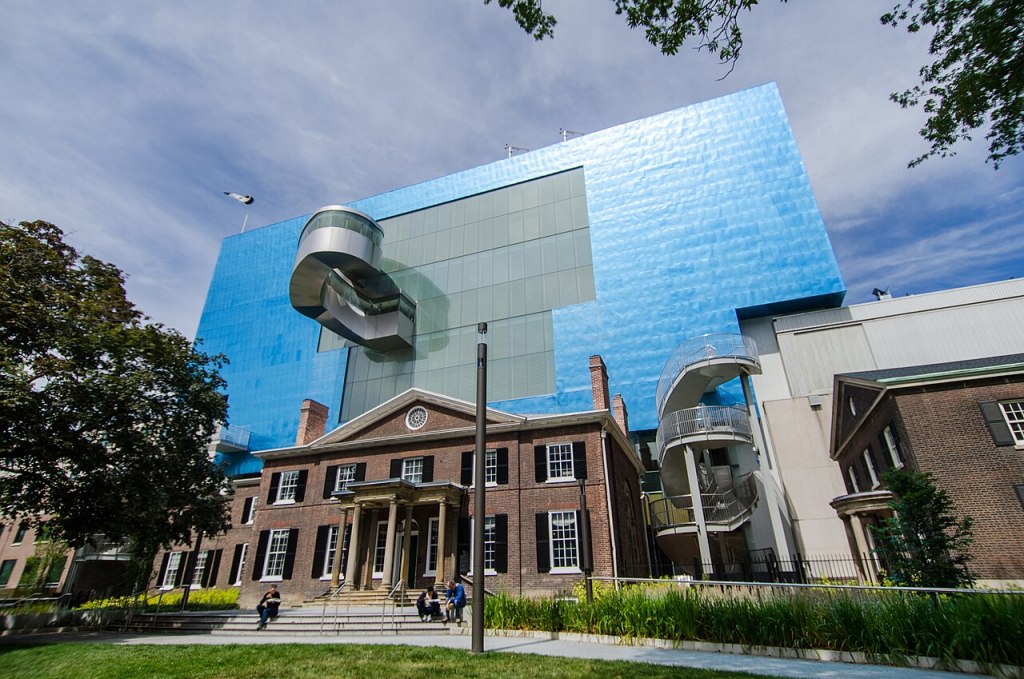
What we are witnessing at the Art Gallery of Ontario is not a failure of values. It is a complete failure of intellectual reasoning.
The Dissonance: What Art Galleries Claim to Defend vs. What They Actually Do
Public Art Galleries routinely assert that they stand for:
- artistic freedom
- intellectual rigour
- plurality of perspectives
- public trust
- critical engagement with the world as it is
Yet when confronted with political complexity, many institutions retreat into procedural fear. Not because the work is weak or because it fails curatorial or scholarly standards. But because an idea becomes conflated with a threat.
In this case, the proposed acquisition of Stendhal Syndrome by Nan Goldin was rejected not on artistic grounds, but because committee members were unsettled by the artist’s public speech. Speech that criticized a state. Speech that articulated moral outrage. Speech that some labelled “antisemitic” without demonstrating how that claim withstands even modest analytical scrutiny.
This is anxiety masquerading as ethics, not governance.
Art Galleries Are Not Neutral Spaces. They Never Were.
Art Galleries and museums often adopt a neutral stance when they are uncomfortable. But neutrality has always been selective.
Institutions have no difficulty collecting artists who:
- Critique capitalism while benefiting from it
- Expose colonial violence while being collected by colonial institutions
- Challenge patriarchy while hanging on walls funded by it
Why, then, does Palestine become the exception? Why is this conflict treated as uniquely untouchable, uniquely radioactive, uniquely deserving of pre-emptive silence?
When institutions decide that a subject cannot be engaged, they are not avoiding politics. They are choosing a politics of avoidance. Scholars and cultural policy analysts have long noted that such avoidance often emerges from reputational risk management under external pressure, not from ethical clarity (PEN America, 2023; NCAC, 2021).
The Cost of False Equivalencies
Equating anti-Zionism with antisemitism causes measurable harm. It:
- Weakens efforts to confront actual antisemitism
- Erases Jewish scholars, artists, and communities who dissent from Israeli state policy
- Collapses political critique into moral accusation
- Incentivizes censorship over dialogue
Academic literature consistently stresses that antisemitism must be defined as hostility toward Jews as Jews, not as criticism of a nation-state or its governing ideology (Bindman, 2019; Hidalgo, 2022). When institutions abandon definitional precision, they undermine both free expression and the fight against genuine hate.
Goldin herself is Jewish. That fact should not shield her from critique, but it should at least give institutions pause before reaching for blunt labels that flatten political, historical, and ethical complexity.
Good governance requires the capacity to hold multiple truths simultaneously. When boards cannot do this, they default to binary thinking. Binary thinking is efficient. It is also intellectually bankrupt.
Why This Matters to Museums & Art Galleries Specifically
These spaces are not therapy rooms. Their purpose is not to preserve comfort.
Good art unsettles. It provokes. It introduces friction between belief and reality. When institutions suppress that friction in advance, they cease to function as cultural stewards and drift toward brand management.
Research on cultural governance and arts censorship shows that when institutions lack clear, pre-established frameworks for handling controversial speech, decisions are more likely to be driven by fear than by curatorial or ethical reasoning (NCAC, 2021; American Alliance of Museums, 2022).
Censorship does not protect institutions. It erodes their credibility.
If acquisition decisions can be derailed by unrelated political speech, then every artist becomes conditionally acceptable. Every collection becomes contingent. Every claim to curatorial independence becomes suspect.
The chilling effect is not theoretical. Artists notice. Curators notice. Silence spreads quietly, efficiently, and with plausible deniability.
A Governance Pattern, Not an Isolated Incident
From a governance and cultural strategy perspective, this case reflects a recurring institutional failure: acquisition and programming processes that collapse under political pressure because they lack clear, defensible frameworks for evaluating dissent, controversy, and artists’ speech.
When institutions are forced to improvise under scrutiny, fear enters the room. Improvisation is where nuance is lost.
This is not a story about one artist, one curator, or one committee.
It is about how institutions respond when values collide with discomfort. About how boards confuse reputational risk with ethical responsibility. About how dissent is reframed as danger rather than as a necessary condition of cultural life.
Museums cannot claim to champion freedom of expression while indirectly punishing it. They cannot invoke complexity while refusing to engage with it. They cannot defend artists in theory and abandon them in practice.
That is the dissonance. And until institutions learn to reason with nuance rather than react with fear, they will continue to fail precisely when leadership is most required.
Quietly. Respectably. And very publicly.
References (Harvard style)
Bindman, D. (2019). Criticizing Israel Is Not Antisemitism. Patterns of Prejudice, 53(1), pp. 1–15.
Eidelson, B. & Hellman, D. (2025). Antisemitism, Anti-Zionism, and Title VI: A Guide for the Perplexed. Harvard Law Review Forum, 139.
Hidalgo, O. (2022). Israel-centred antisemitism and the challenge of non-antisemitic criticism. Religion, State & Society, 50(2), pp. 123–140.
National Coalition Against Censorship (NCAC). (2025). Museum Best Practices for Managing Controversy.
PEN America. (2025). The Censorship Horizon: A Survey of Art Museum Directors.
American Alliance of Museums (AAM). (2025). Political Exhibitionists: Ethical Considerations in the Display of Political Art
 EMC³ Consulting
Leave a comment